

Overview
This topic explains how to configure Google Workspace to support single sign-on (SSO) in LaunchDarkly.The procedures in this topic explain how to configure SSO for Google Workspace. To learn how to configure Google OAuth instead, read Google OAuth.If a member signs in to LaunchDarkly using Google OAuth, they cannot also sign in to the same account using Google Workspace SSO. Similarly, if you invite a member to join a LaunchDarkly account using Google Workspace SSO, they cannot also sign in using Google OAuth.
Prerequisites
To configure SSO for LaunchDarkly using Google Workspace, you must complete the following prerequisite:- Configure SAML for authentication. For more information, read the Google knowledge base.
| Google field | LaunchDarkly setting |
|---|---|
| ACS URL | Use LaunchDarkly’s Assertion Consumer Service URL value. |
| Entity ID | Use LaunchDarkly’s Entity ID value. |
| Start URL | Use LaunchDarkly’s Start URL value. |
| Signed Response | Check this box. |
| Name ID | SelectBasic InformationandPrimary Email. |
| Name ID Format | SelectEMAIL. |
| Attribute Mapping | Enter role as the application attribute, and select the custom user attribute that corresponds to the
desired role. You will map customRole and teamKey in a later step. |
Configure SSO for Launch
Darkly with Google Workspace Before you create the LaunchDarkly app in Google Workspace, you must create LaunchDarkly-specific fields for roles, custom roles, and teams. To configure these fields:- Log into Google Workspace.
- Navigate to your user directory by clicking Directory and then Users.
- Click the Manage user attributes icon. A popup screen appears:
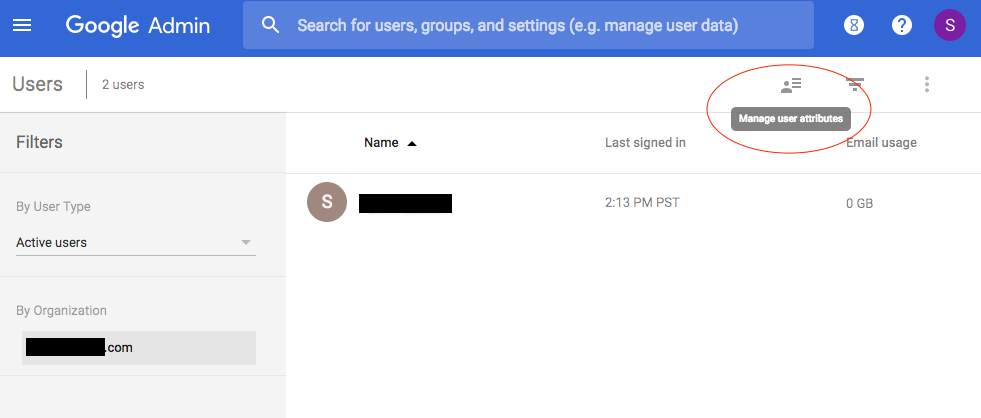
The "Manage user attributes" icon.
- Select Add Custom Category.
- Name the custom category whatever you like. The example below uses LaunchDarkly Attributes.
- Add the
role,customRole, andteamKeyfields:
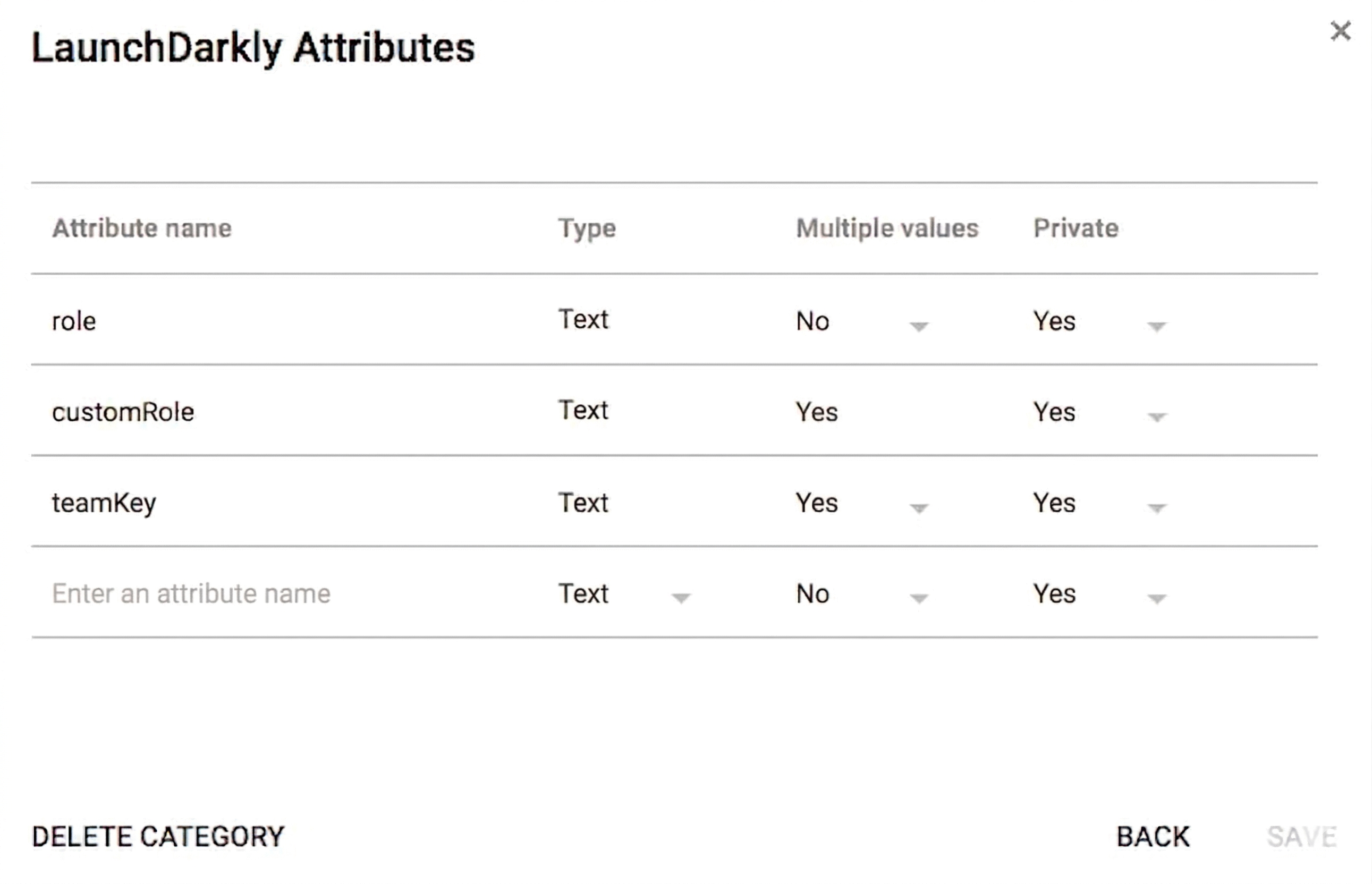
The "LaunchDarkly Attributes" screen.
Add Launch
Darkly as a custom SAML application Next, you must add LaunchDarkly to your Google Workspace apps. To add LaunchDarkly:- Log into Google Workspace.
- Navigate to Apps, then SAML Apps.
- Click the plus button to Add an app.
- Select Setup my own Custom App to configure LaunchDarkly. The setup workflow initiates.
- In step 2 of the workflow, copy the information from the setup workflow. You’ll need to add this into LaunchDarkly’s Security tab under Edit SAML Configuration:
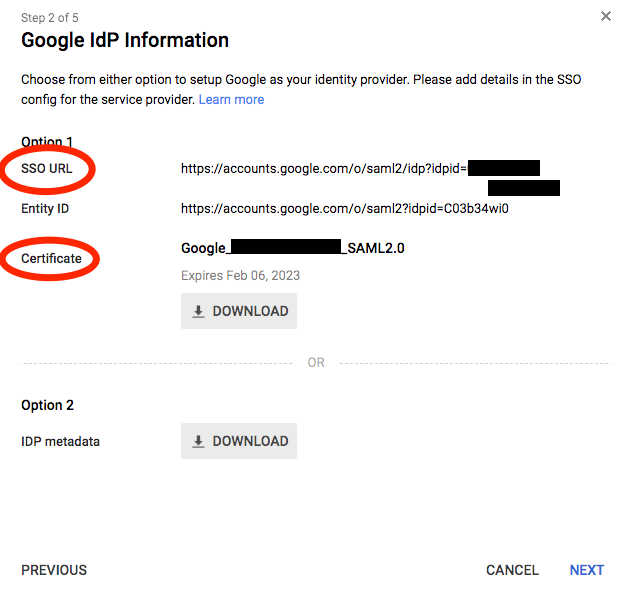
The Google IdP information window.
- In step 3, enter the name of the app.
- In step 4 of the workflow, provide the Assertion consumer service URL, entity ID, and start URL for your LaunchDarkly account:
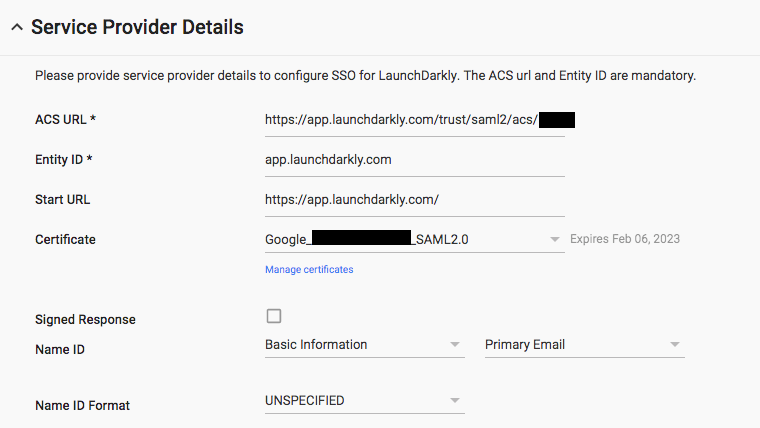
LaunchDarkly's service provider details.

LaunchDarkly's SAML Configuration panel.
- In step 5, map the LaunchDarkly attributes
firstNameandlastNameto Google’s “First Name” and “Last Name” basic information fields. Map the LaunchDarkly attributesrole,customRole, andteamKeyto Google’s “LaunchDarkly Attributes” fields of the same name. These mappings are shown below:
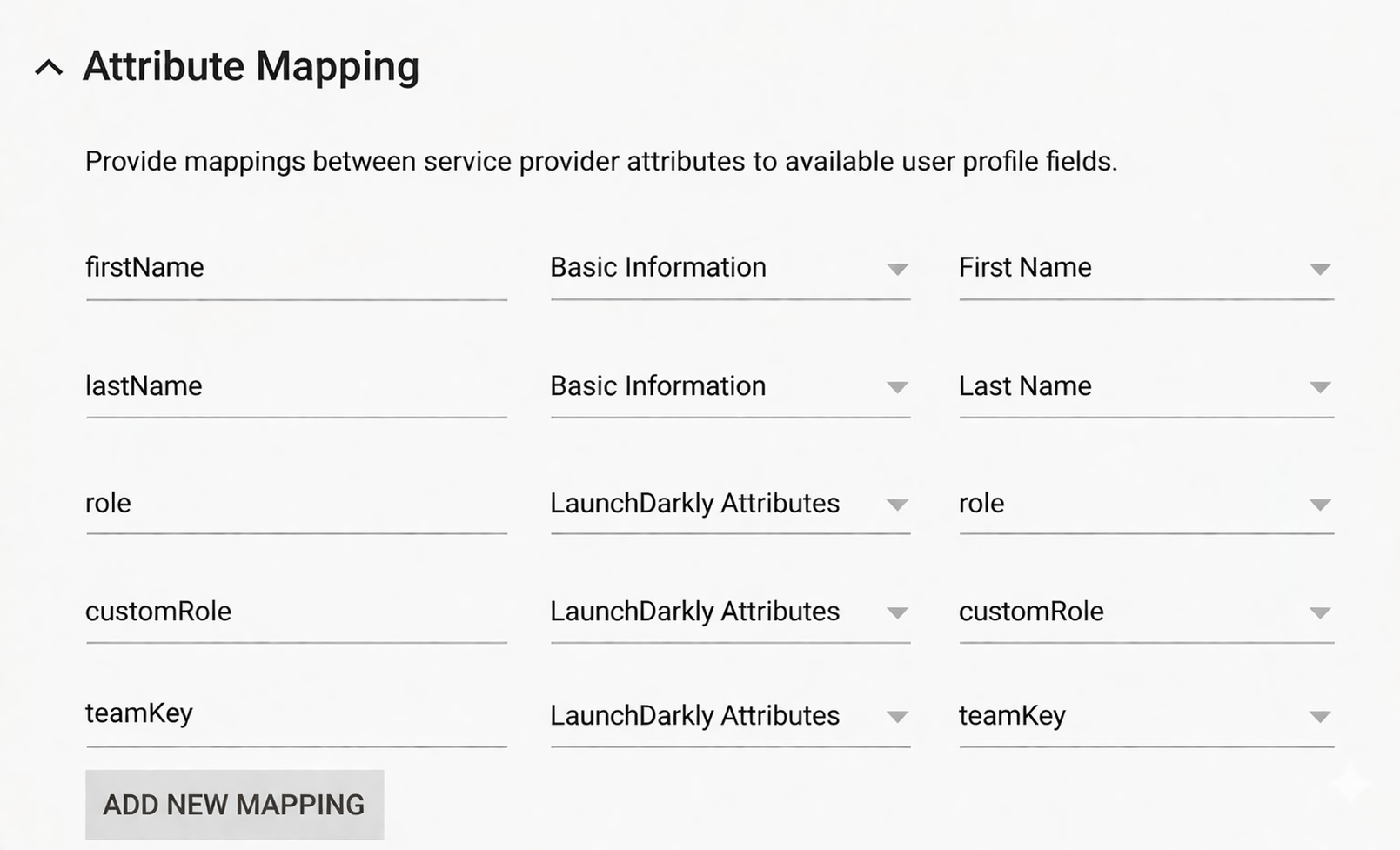
The Attribute Mappings screen.
In the screenshot above, the names in the left-hand columns map to those present in LaunchDarkly. You must name them exactly as shown, including exact casing (
role, customRole, and teamKey), or configuration will fail.Assign roles, custom roles, and teams with Google Workspace
Now that the application is configured, you can assign roles and teams. To assign roles and teams:- Log into Google Workspace.
- Navigate to Directory, then Users.
- Click on the Google Workspace user that you want to assign roles to and choose Account to bring up the user’s account settings.
- Click Edit beneath “Manage user attributes” to add the user’s roles and teams to the corresponding attribute fields:
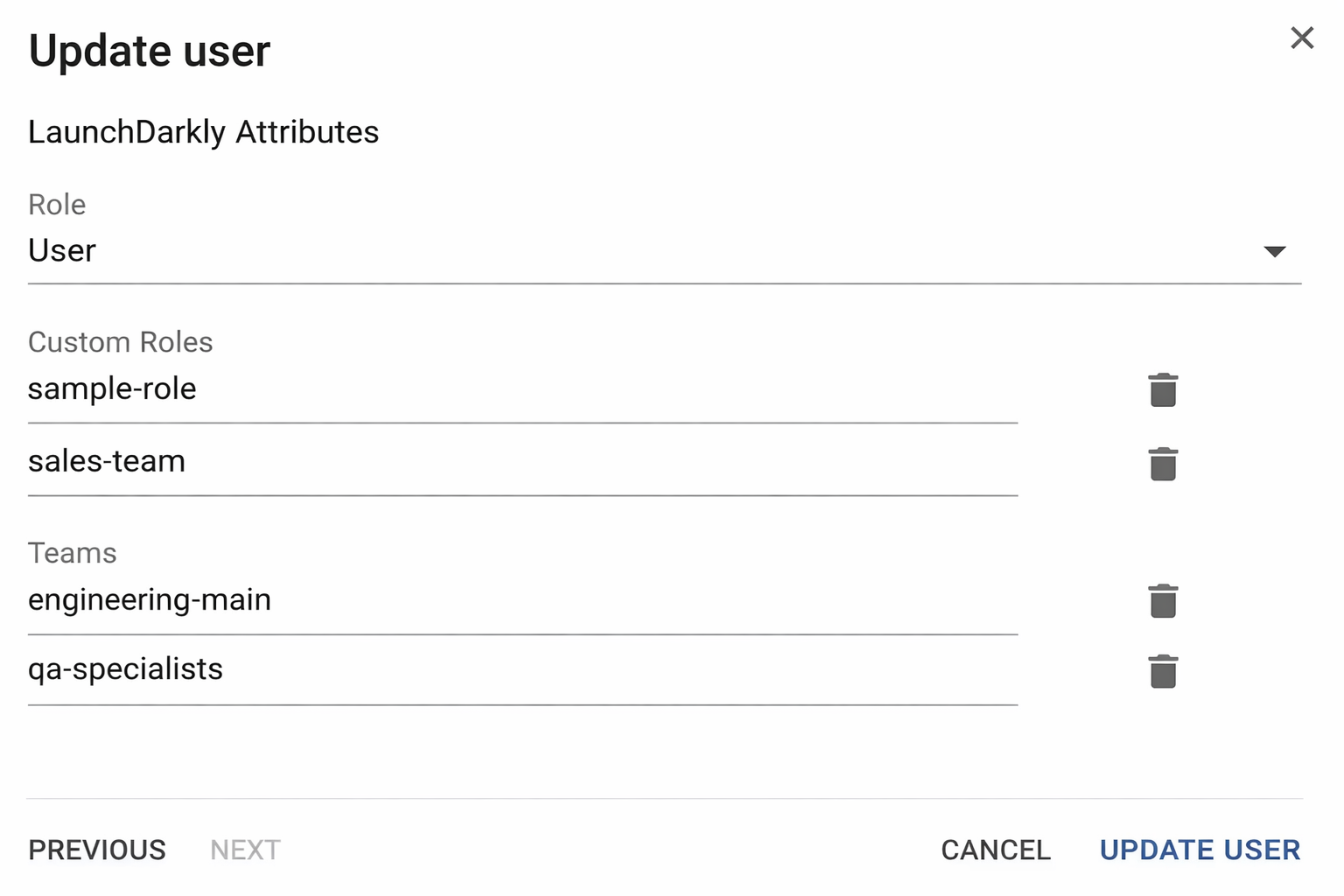
The "Update User" screen.
- Click Update User.
SAML ignores empty role, customRole, and teamKey fields. To clear all existing roles or teams, enter an empty string "" into the field.